

The Sergeants' Academy


- Description
This premier law enforcement frontline supervisor academy provides police sergeants, corporals, and public safety managers with the tactical and strategic toolsets required to eliminate operational drama, ensure POST compliance, and build high-performing squads of self-actualized adults.

Format: 40‑Hour Live Online Academy (Five-Session Series)
Dates: Monday, December 7 through Friday, December 11, 2026
Daily Schedule: 08:00 MST Begins promptly | Zoom invitations distributed before Day 1
Compliance: Roster maintained for formal POST compliance documentation
Give your team members the skills, confidence, and strategic mindset your agency needs and your constituents expect. Enroll them in The Sergeants\' Academy and build future leaders.
This five‑session series equips frontline supervisors with the strategic, operational, and people‑centered leadership skills required in modern law enforcement. Participants learn how to think and plan like executives, lead teams with clarity and accountability, manage budgets with confidence, and strengthen both internal culture and community trust. Each session builds practical capability — strategic planning, leadership and management principles, budgeting, team development, and community/media relations — giving sergeants the tools to guide their agencies toward long‑term success.
Who Should Attend
This comprehensive frontline academy is designed to establish consistent leadership baselines across all specialized divisions, making it critical for:
Law Enforcement First-Line Supervisors
- Sworn Sergeants & Corporals: Patrol, investigations, traffic, and tactical supervisors looking to successfully transition from technical doers to proactive leaders.
- Promotional Candidates: Commissioned and non-commissioned personnel preparing for upcoming promotional assessments and oral boards.
Detention & Public Safety Command
- Corrections & Jail Supervisors: Shift leads, booking sergeants, and support supervisors managing high-liability environments.
- Communications & Support Managers: 911 dispatch supervisors, records managers, and property/evidence directors leading civilian personnel.
Academy Curriculum & Session Outlines
Session 1 – The Sergeant\'s Role As Visionary & Strategic Planner
Move past reactive daily firefighting and learn executive-level methods to build a proactive learning organization instead of a checked-box trained organization.
- Strategic issues facing law enforcement over the next 10 years and how to manage around them.
- Executive-level techniques for strategic and tactical deployment planning.
- Improving organizational productivity, shift quality, and structural accountability.
- Developing an effective Mission and Vision that drives frontline street execution.
- Principles of effective Strategic Planning and building an agency Planning Cycle Calendar.
Session 2 – Implementing Effective Leadership & Management Principles
Ditch the \"parent/child\" management defaults and install an environment that fosters critical thinking and direct adult-to-adult communication lines.
- How to create a shift environment that fosters effective decision-making and acceptance of accountability at all echelons.
- Implementing a growth-focused and effective job performance review system.
- How to systematically improve communication among and between the rank structure, shifts, and specialized sections.
Session 3 – The Sergeant\'s Role In Finance & Budgeting
Master the strategic side of public sector finance so you can confidently justify your squad’s tactical asset and staffing needs.
- How to always be prepared for professional administrative budget presentations.
- Integrating your specific shift or division goals cleanly with the overarching agency budget process.
- How to sell your budget needs effectively to policy makers, city budget committees, and the taxpayers.
- How and why to involve key internal decision-makers throughout your agency in finance and budgeting.
(This is strictly a leadership course, not an accounting or bookkeeping class.)
Session 4 – The Sergeant\'s Role In People Management
Dismantle the victim tells, blame-shifting, and passive friction that destroy morale and turn your squad into a mission-focused collective.
- Defining who the true \"team\" is for your public safety agency.
- What it takes to create and maintain an effective squad focused strictly on the agency\'s mission and objectives.
- Identifying and systematically overcoming the hidden internal obstacles to team performance.
- First-line leadership’s absolute responsibility to model behavior by example and hold others accountable to follow.
Session 5 – The Sergeant\'s Role In Community and Media Relations
Own your agency’s public narrative, defend your officers, and deliver high-trust messaging during critical field incidents.
- Why every law enforcement agency needs a highly effective, proactive marketing and communication program.
- Foundations of public relations, community engagement, and direct media relations.
- Structuring the role of an effective Public Information Officer (PIO) for transparency.
- How to deal professionally with negative press and safely conduct field press conferences.
- How to get the true word out about your agency\'s impact without relying solely on traditional local media outlets.
Course Logistics & Self-Assessment
- First Line Supervisor Self-Assessment: Included with your registration. This diagnostic tool provides an objective baseline of your daily leadership habits and boundary management, revealing the high-impact friction points you must master. It is entirely for your personal use, but ensure you have your results accessible during class labs. Access is granted immediately upon checkout.
- Technology Requirements: Each participant must use a dedicated computer or laptop equipped with a functioning camera and microphone. Full interactive engagement is mandatory to fulfill compliance hours and receive the 40‑hour Certificate of Completion.
RECOMMENDED READING: Check out Steve\'s books by clicking the cover photos below:
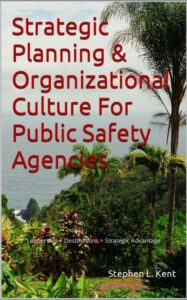

Whether you are a patrol supervisor protecting your shift from toxic drama or a command officer defining a twenty-year operational horizon, these volumes deliver the mechanical frameworks required to trade institutional noise for Trail Language. Master the discipline of leading the person in the mirror, and build a resilient learning formation capable of serving the strategic needs of the next three generations.
Comments are closed, but trackbacks and pingbacks are open.